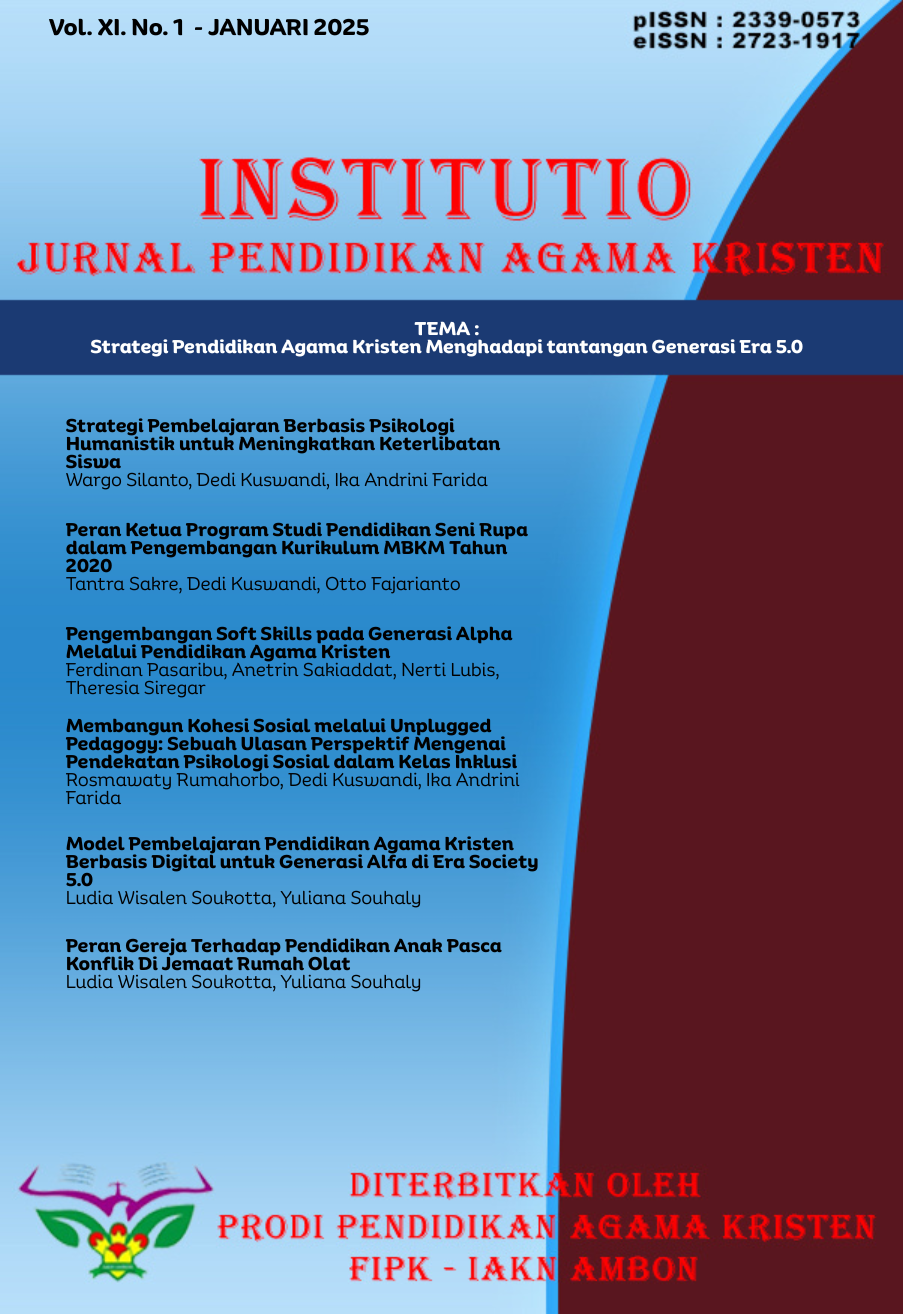
Strategi Pembelajaran Berbasis Psikologi Humanistik Untuk Meningkatkan Keterlibatan Siswa
DOI:
https://doi.org/10.51689/bzt3fe12Abstract
Abstract: Student engagement is an important indicator of learning effectiveness; however, various reports show that active student participation in Indonesia remains low. This literature review analyzes the role of humanistic psychology based learning strategies in enhancing student engagement across cognitive, affective, and behavioral dimensions. Humanistic psychology, rooted in the ideas of Maslow and Rogers, emphasizes the fulfillment of basic needs, authentic interpersonal relationships, and emotionally safe learning environments as the foundation of meaningful learning. The findings of the literature review indicate that strategies providing autonomy, empathetic communication, reflective learning, and contextual learning experiences can enhance intrinsic motivation, learning interest, and students’ active participation. Several studies also highlight that the quality of teacher student relationships is a decisive factor in engagement, particularly through emotional support, constructive feedback, and a positive classroom climate. In the digital era, the integration of technology that preserves humanistic values has also been shown to strengthen student engagement. Overall, these findings suggest that the humanistic approach makes a significant contribution to improving student engagement and is relevant for application in modern education. This research provides a theoretical and empirical foundation for developing learning practices that are more humanistic, empowering, and oriented toward learners’ needs.
Keywords: humanistic psychology, learning strategies, student engagement, intrinsic motivation
References
Downloads
Published
Issue
Section
License
- Seluruh materi yang terdapat dalam situs ini dilindungi oleh undang-undang. Dilarang mengutip sebagian atau seluruh isi situs web ini untuk keperluan komersil tanpa persetujuan dewan penyunting jurnal ini.
- Apabila terdapar beberapa artikel dalam JURNAL INSTITUTIO yang melanggar atau berpotensi melanggar hak cipta yang anda miliki, silahkan laporkan kepada kami, melalui email pada [email protected]
- Aspek hukum terhadap akses setiap informasi dan artikel yang tercantum dalam situs jurnal ini mengacu pada ketentuan lisensi Creative Commons Attribution-ShareAlike (CC BY-SA).
- Semua Informasi yang terdapat di INSTITUTIO bersifat akademik. INSTITUTIO tidak bertanggung jawab terhadap kerugian yang terjadi karana penyalah gunaan informasi dari situs ini