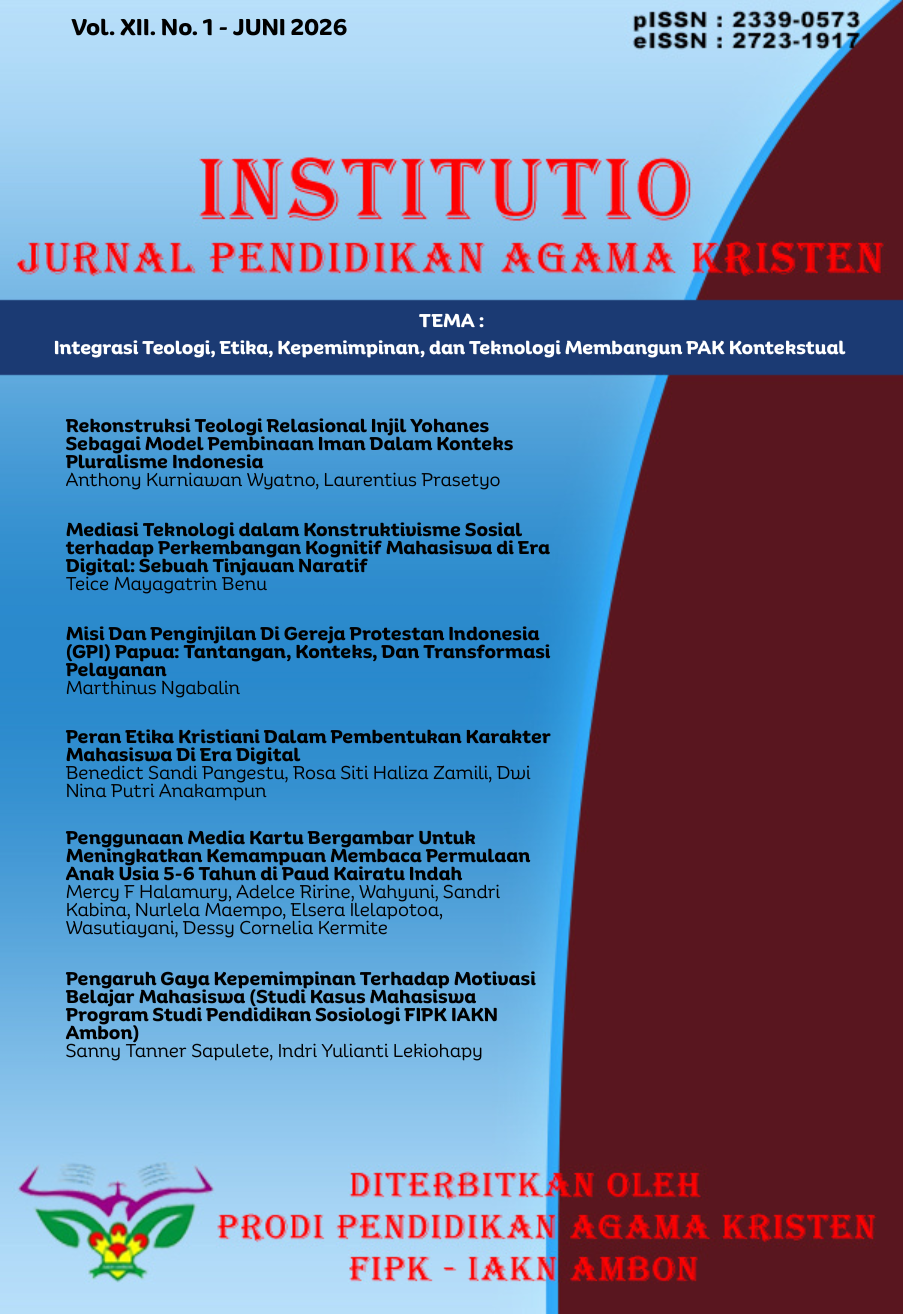
Mediasi Teknologi dalam Konstruktivisme Sosial terhadap Perkembangan Kognitif Mahasiswa di Era Digital: Sebuah Tinjauan Naratif
DOI:
https://doi.org/10.51689/h9hzdd79Abstrak
Abstract : Digital transformation has reshaped the landscape of education, where technology is no longer positioned merely as a supporting tool but has evolved into a cognitive bridge that fundamentally shapes how students think and interact. This article aims to critically explore how technological mediation reconstructs the principles of social constructivism and influences students’ cognitive competencies. Through a narrative review of key literature from 2014–2025, this study synthesizes Vygotsky’s classical theory with contemporary lenses such as Connectivism and Collaborative Cognitive Load Theory (CCLT). The research identifies three crucial points: first, the redefinition of Vygotsky’s concept of the Zone of Proximal Development, which now transcends physical boundaries and transforms into a global connective network; second, the implementation of the 5E Model within Technology-Enabled Active Learning (TE-ALE) environments has proven to yield significant net effects on sustaining cognitive abilities; and third, online collaborative learning environments (OCLE) function as a “collective working memory” capable of optimizing cognitive load for higher-order thinking activities. This article concludes that the effectiveness of digital learning depends not merely on the availability of devices, but on the design of ecosystems that balance cognitive efficiency and social presence. The implications of this study emphasize the importance of integrating metacognitive strategies into higher education curricula to address the complexity of future information landscapes.
Keywords: Social Constructivism, Technological Mediation, Connectivism, Collaborative Cognitive Load Theory (CCLT), Cognitive Development
Referensi
Unduhan
Diterbitkan
Terbitan
Bagian
Lisensi
- Seluruh materi yang terdapat dalam situs ini dilindungi oleh undang-undang. Dilarang mengutip sebagian atau seluruh isi situs web ini untuk keperluan komersil tanpa persetujuan dewan penyunting jurnal ini.
- Apabila terdapar beberapa artikel dalam JURNAL INSTITUTIO yang melanggar atau berpotensi melanggar hak cipta yang anda miliki, silahkan laporkan kepada kami, melalui email pada [email protected]
- Aspek hukum terhadap akses setiap informasi dan artikel yang tercantum dalam situs jurnal ini mengacu pada ketentuan lisensi Creative Commons Attribution-ShareAlike (CC BY-SA).
- Semua Informasi yang terdapat di INSTITUTIO bersifat akademik. INSTITUTIO tidak bertanggung jawab terhadap kerugian yang terjadi karana penyalah gunaan informasi dari situs ini